Pages

Showing posts with label Operating Systems. Show all posts

Monday, August 15, 2011

Chrome OS Bootable Flash Drive! (Built on: 8/9/2011)


New version! I'm also cleaning up all of the old versions and linking them to this page. This version is very very cool, lots of new ideas and features. Chrome OS is really coming into its own, you can see Google's new design team hard at work here. Check it out!


Credits and Utilities:
To unpack this file, you will need the totally awesome and free unzipping utility: 7zip
This pack contains the Image Writer for Microsoft Windows, which is a great, simple way to take or place images onto drives. Give these guys a hand!
Instructions are included in a text file in the download!

Tuesday, June 7, 2011

Chrome OS Bootable Flash Drive! (Built on: 6/7/2011)


Another version! Its been quite a while since I've put one of these out, so I figured it would help everyone if I released an updated version. As usual, all instructions are included in the download, so pull it down and give it a shot. Chrome OS is really growing up, and fast. I'm really excited for the future of Chrome OS and cloud-based computing in general. This is the future and it is now.

Chrome OS - 060711.7z
Chrome OS - 061311.7z

Update: Looks like there were a few nasty bugs with the June 7th build, I've rebuilt with newer sources in an attempt to give you a more stable build. Enjoy!

Update 2: Looks like the 6/13 build has some major GUI bugs and stability issues. Here's the main point: These are daily builds, nasty bugs happen. I'll wait a bit before releasing the next daily build, see what happens from there. I've re-included the link to the previous version, as it is a bit more stable.

Credits and Utilities:
To unpack this file, you will need the totally awesome and free unzipping utility: 7zip
This pack contains the Image Writer for Microsoft Windows, which is a great, simple way to take or place images onto drives. Give these guys a hand!
Instructions are included in a text file in the download!

Tuesday, March 29, 2011

Chrome OS Bootable Flash Drive! (Built on: 3/28/2011)


Well, here it is again! Another build, this one a week later. I've heard some reports that the Chrome Web Apps weren't working quite perfectly on some machines, that's the risk when you're running daily-builds of an operating system. This is freshly built as of yesterday, and I've update the instructions to include how to create a bootable Chrome OS flash drive in both Linux and Mac OSX. As usual, the Windows instructions are still there as always. After the jump, I'll include a copy/paste of the Instructions.txt file for your convenience. Have fun and let me know what you think!

Chrome OS - 032811.7z

Credits and Utilities:
To unpack this file, you will need the totally awesome and free unzipping utility: 7zip
This pack contains the Image Writer for Microsoft Windows, which is a great, simple way to take or place images onto drives. Give these guys a hand!

Thursday, March 24, 2011

Chrome OS Bootable Flash Drive! (Built on: 3/24/2011)


I've taken to packaging my own vanilla builds of Chrome OS (Well... Chromium OS), and am going to start releasing them semi-regularly. Comes packed with the great Image Writer for Microsoft Windows (https://launchpad.net/win32-image-writer) and stupid-simple instructions on getting a bootable flash drive made to test drive Chrome OS. Ever since Hexxeh stopped major development (that I've seen, correct me if I'm wrong), I've been listening to people clamor for an easy way to test drive Chrome OS without having to build from the source code up. I want to help those people. Every so often, I will make a build of Chrome OS and post it here to my blog. Enjoy!!

This file is packed with 7-zip! The completely free (and open source) zipping utility! Grab it here: http://www.7-zip.org/
Chrome OS - 032111.7z - ~120MB
New Version Here

Tuesday, December 21, 2010

Cloudbound: The CR48 (Part 2)


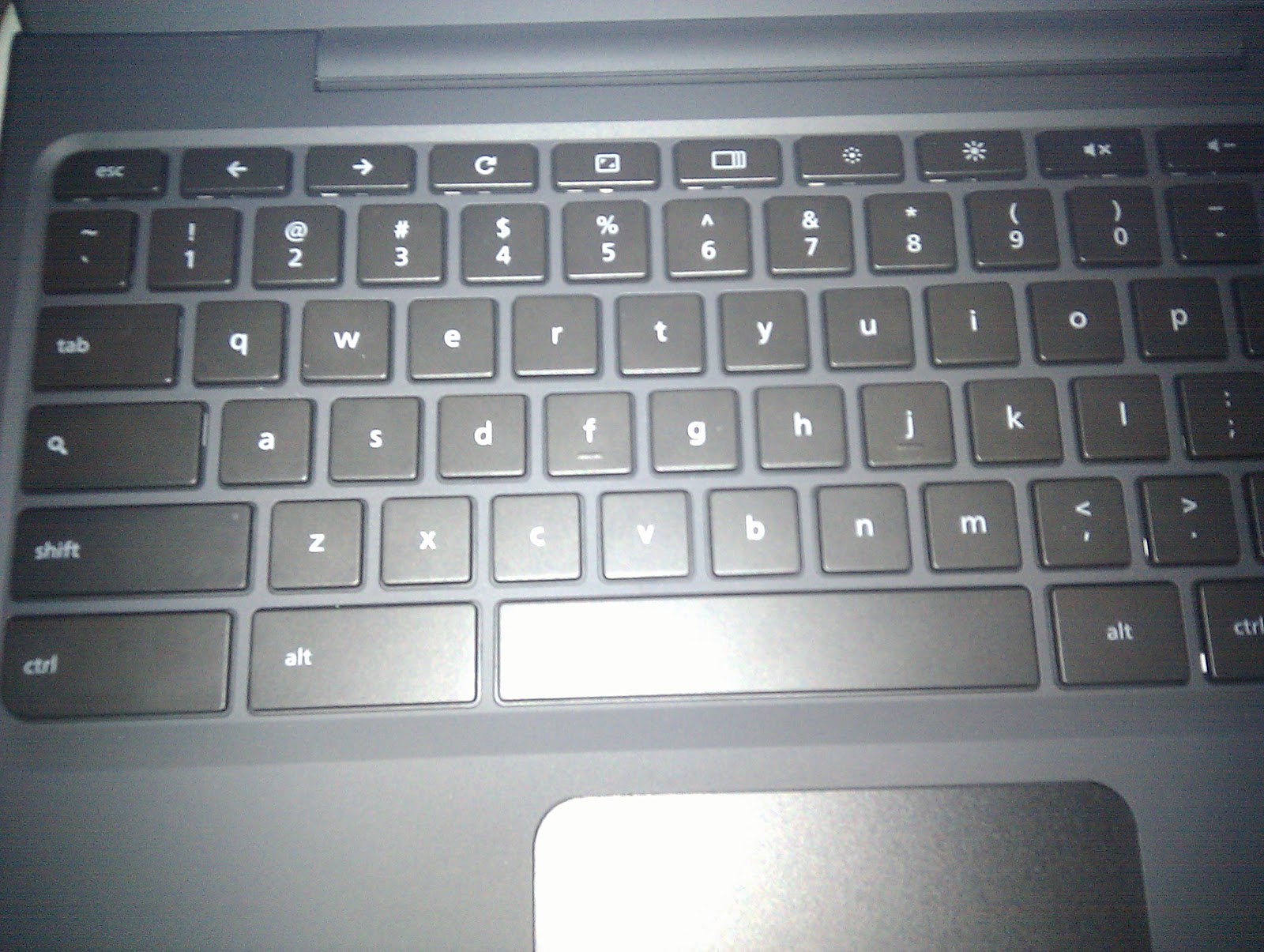
The CR48 notebook itself is sleek, simple, and unbranded. Completely unbranded. No logos anywhere. Just a matte black notebook with a rubbery feel. To be honest, reviewing the hardware doesn’t really make much sense. The purpose of this pilot program isn’t to review the laptop that some company made on contract, the point is to review and bugtest the software.
But the readers want to know, just how is the CR48? In a word: Amazing. Like the Nexus One, the CR48 embodies the essence of what Google thinks is possible with a Chrome OS notebook. Simple, from the keyboard to the case, the CR48 is the essence of software driving hardware. Not one logo is shown on the device in any form. Not even an informational sticker or set of warning labels. This is a tool for developers through and through. Honestly, I wish all notebooks were built this cleanly.


A small compliant so far, the battery doesn’t quite fit 100% snug to the bottom of the case on one corner. Not a deal breaker by any means, but this shows that the company Google hired is still working out the kinks in the manufacturing process. Granted, this is alpha-hardware, and never meant to be sold to the general public in this form, so I really have no reason to complain.
All in all, I really love the simplicity, long battery life, and light weight, easy to carry shape of this build. If this is the template for Chrome OS notebooks, its about to be a very good year for Google. The next post I have lined up is a general overview of Chrome OS, then feature highlights and more in-depth views, including bugs. Stay tuned!

Thursday, December 16, 2010

Cloudbound: Chrome OS Introduction (Part 1)

Welcome to Cloudbound! My brand new blog category dealing with all things Chrome OS and CR48. As some of you may know already (full disclosure here), I am now part of Google's official beta-tester group for Chrome OS and CR48. Before I get into the specifics, let me go over exactly what Chrome OS and CR48 are, just in case you are new to the game.

Chrome OS is a Linux-based operating system made by Google for cloud computing devices. My, oh my, what a buzz word. Cloud computing. What is it exactly? I can guarantee that most of you do some form of cloud computing each and every day.

Cloud computing is using applications and storage on the internet instead of on your local computer. Ever upload a picture to Facebook, Picasa, or Flickr? You’re using the internet to store those pictures, you are using cloud computing! Ever use Google Docs to type up a paper? That’s another example of cloud computing. Ever listen to music on Pandora, watch a television show on Hulu, or upload a video to YouTube? Those are all great examples of cloud-based media services.
So why make an operating system based entirely off of web services? Plenty of reasons! The biggest boil down to the following points:
  • No need to back up local data (for the most part) - Everything you need is already in the cloud!
  • No need to run cumbersome anti-virus software, as everything you are doing is online, you are only running a web browser (and plugins) on the local machine, nothing else.
    • This does, however, place a higher emphasis on staying safe from phishing sites.
  • Cheaper computers! If the only requirement is the ability to run a web browser, the hardware needed is relatively cheap to manufacture. No need for expensive components and upgrades. All the power you need is on the web.
The next post out will concern the hardware and physical feel of the CR48 notebook and my opinions on the design and build quality. Stay tuned!

Sunday, September 12, 2010

Kubuntu: The Perfect Middle Ground?

I really really like Kubuntu 10.04. Out of curiosity, I loaded up Kubuntu 10.04 onto my external hard drive to give it a spin. Other than loving the fact that I have my own personal encrypted Linux install bootable at all times on just about any computer I happen to be near, I really really like the new KDE. Take the easy-to-use mentality of standard Ubuntu and mix it with the endless-options power-user mentality of KDE and you get Kubuntu. First impressions went something like this:
Oh! Its the ease of Ubuntu! But wait... all of these options.. all of these rolled in configuration options, right up front? This is made for power users! But it is still Ubuntu? I'm confused... and happy...
Kubuntu seems like the perfect middle ground for those not yet happy to jump to Fedora, SuSE, or Debian proper. Kubuntu still contains some helpful Ubuntu-centric additions (read: training wheels) for the Linux newcomers, but maintains the features and customizations that power-users crave. To add to the list of things I really like about Kubuntu, it is absolutely beautiful.
If I were to pick one Linux distribution to deploy to a mass enterprise environment, it would be Kubuntu. Debian backend, Ubuntu ease-of-use, and KDE power and flexibility. It could possibly be one of the best general office use distributions yet.
The only problems I can see with KDE is operating within a current Microsoft-rich environment (and this is more of a general Linux /OpenSource problem than a KDE/Ubuntu problem) is the total lack of Exchange support. Whether it is with Evolution or Kontact, it just kills me when I find amazing open source applications that don't work with the biggest force in business today. If running a business on open standards and open technologies is interesting to you, consider Kubuntu a powerful choice.
I highly recommend Kubuntu for those who are ready for more Linux power in their hands, while not quite ready to take the full plunge.

Thursday, July 22, 2010

I'm an iPad. And I'm a... What am I again?

This article is in response to the new ASUS eee Pads that are coming out. Engadget did ran a preview article on them and I would like to share my thoughts on the subject:
I really like the idea of a tablet that actually contains any resemblance of functionality. The only problem I have with these and most other non-apple tablets is that they are almost all based off of Windows 7. Now, I don't have a problem with Windows 7, at all. I think it is the best version of Windows ever created, and it takes a lot for me to say that, but you cannot make a true, intuitive, responsive touch-based interface by putting a skin over an existing, built-for-mouse-and-keyboard operating system. Windows 7 with NEVER be a *great* touch operating system, just because that wasn't the main focus when creating the operating system. Sure, Windows 7 has some pretty good touch-centric UI features, but it wasn't built from the ground up to be a touch-only, or touch-first system. Windows 7 was designed, first and foremost, to be operated with a keyboard and mouse. iOS and Android were both built from the ground up to be touch-first (not neccessarily touch-exclusive, however) devices, which automatically puts them head-and-shoulders above any Windows 7 skin. This new ASUS hardware looks absolutely wonderful, but I can't help but imagine how amazing it would be with a software set that was built primarily for this type of device. To summarize all of this: I can't help but feel the inclusion of Windows 7 on this tablet is just as good of a fit as putting square wheels on a car.

UPDATE: It appears that ASUS has announced that they are looking to put Android on the eeePad. A very wise move, indeed.

Wednesday, June 2, 2010

Google Moves Away from Windows

So, word has been getting around that Google is officially dropping support for Microsoft Windows internally. Computers running Microsoft Windows are going to be phased out for Linux and OSX machines. Honestly... Who didn't see this coming?
Google has stated many times that the default operating system for Googlers is a heavily modified Long Term Support (LTS) version of Ubuntu Linux, affectionately named "Goobuntu". While this modified distribution has never been released outside of Google, it is in wide use and support there, and hardly a secret. That said, Windows machines aren't being done away with entirely, Google has stated that employees that really need to use Windows can acquire special permissions to use the operating system. Lets take this from a fresh angle: If all you really know how to use is Windows, you probably shouldn't be working at Google.
Lets think logically about what Google really needs Windows machines for: Windows development. Sure, they have Picasa, Desktop Search, Earth, and a few other cross-platform apps that they need to build and test on versions of Windows, but these things can easily be accomplished inside a virtual environment. The vast majority of Google's focus right now is split between Chrome OS (Linux), Android (Linux), and the web, and if recent trends have shown us anything, its that Google is interested in moving away from desktop applications altogether. Google has proven that they can take big technologies and move them to the web, and that's exactly what they are focused on. Microsoft's mission used to be "A computer on every desk and in every home, running Microsoft software.", and Google has taken a much more open stance in theirs, what their mission should be is: "A browser on every device, with every person, using Google products."
If Google were a software company first-and-foremost, this would be a huge deal, but they just aren't. Google is focused on providing platforms and services for other people to utilize and build on. Android development tools exist for every platform, and, from a personal point of view, development on Linux platforms tend to be much nicer than Windows or OSX. By keeping Apple machines around, Google is showing that they will still be developing applications for the iPad and iPhone. This is extremely important. Google doesn't want to limit who can use their products, so having a presence on their biggest competitor's device is a wonderful strategy. Google isn't interested in limiting themselves, and being browser-based is the cornerstone of their ideals.
It does seem like Google is setting a precedent for other companies as well. Showing other technology businesses that they can be free from licensing and closed, bug-ridden software. If one of the biggest technology companies in the world can do without Microsoft Windows, anyone can. This move to make their unreliance on Windows official and public seems like a power play to the rest of the industry, setting an example and forging the first path away from Windows. I'm all for more businesses relying on Linux, it will do huge amounts of good for the open source ecosystem and mentality.
Like I said before, I'm really floored that people are surprised over this, everyone should have seen this coming. Only time will tell if other companies are willing to follow Google's example and give up their Windows addiction.

Original Engadget post

Thursday, January 29, 2009

Didn't learn your lesson the first time, eh?


I wouldn't consider myself an Apple fanboy in any way, but one thing is for sure, they know how to make things simple for their customers. One thing that's always irked me about Microsoft's Windows line... Why all the different versions? Why do I (the consumer) need to choose between Windows 7 Starter, Basic, Home Basic, Pro Basic, Pro, Home Extended, Premium Pro Home, Home, Premium, and Premium Ultimate Home Pro Edition with Sprinkles?


Thanks to Gizmodo for the image


Ok... ok.. so I'm being a little ridiculous here... But even still.. I think I could work with two versions, three is pushing it.. but five?? Why do we need to choose from five different versions of the same product? When you buy Leopard 10.5 for the mac, you buy Leopard 10.5. There isn't a pro, basic, starter, or business edition. Its just Leopard. All of these different versions cause a bit of a headache with Windows XP, and somewhat of a migraine with Vista. What do you want to do with your computer? Take a look at this handy table full of terms consumers don't understand and some terms that only exist in our marketing textbooks!! No, Microsoft! This shit has to stop. People want to use their computers. People don't want to choose between 2, or 3, or 4, or hell.. 5 different versions of the exact same codebase. Its fucking stupid.
I've got an idea.. a brilliant idea. No tech company has ever, Ever done this before. Make a solid product (You've got me there, 7 is a fucking rock), make it shiny (7's got this one down too), then make it stupid easy to buy. How do you go about doing this? Put one version out, put it on every shelf. Don't even put out Upgrade packs and Full install packs. Throw it on one disk, put it on shelves, in schools, in the hands of celebrities (You can skip Seinfeld safely.. don't worry), and make people want it. You'll be the talk of the town! You'll be unique! You'll be pretty and everyone will love you! Oh wait... Apple did that already.


This post is in reply to: