Showing posts with label Google+. Show all posts
Showing posts with label Google+. Show all posts
Monday, April 9, 2012
Chrome OS: Aura Window Manager
Google made a major update to Chrome OS today, releasing the Aura window manager on the Dev channel users. Check out the full rundown and screenshots in the Google+ post here.

Monday, November 7, 2011
Chromium OS Bootable Flash Drive! (Built on: 11/4/2011)
This version brings a bunch of beta design functionality and some speed increases! Enjoy!
I did notice some driver weirdness on some machines with this build, let me know what you find out.
Credits and Utilities:
To unpack this file, you will need the totally awesome and free unzipping utility: 7zip
This pack contains the Image Writer for Microsoft Windows, which is a great, simple way to take or place images onto drives. Give these guys a hand!
To unpack this file, you will need the totally awesome and free unzipping utility: 7zip
This pack contains the Image Writer for Microsoft Windows, which is a great, simple way to take or place images onto drives. Give these guys a hand!
Monday, August 15, 2011
Google+ Games

Just spent a bit of time playing around with Google+ games, and I have to say, I'm really enjoying them! I don't ever see any game status updates, I don't get notifications about games, I don't get spammed about games, UNLESS I'm in the "Games" tab. I love gaming, I really do, but I don't use the Google+ Social Network to play games, I use social networks to socialize, the games are a nice bonus, but I don't want them to be the main feature. The Games Tab makes this simple and elegant. One of the main reasons I'm loving Google+ right now. And beyond that, the games are actually pretty good! More to come later!
Chrome OS Bootable Flash Drive! (Built on: 8/9/2011)

New version! I'm also cleaning up all of the old versions and linking them to this page. This version is very very cool, lots of new ideas and features. Chrome OS is really coming into its own, you can see Google's new design team hard at work here. Check it out!
Credits and Utilities:
To unpack this file, you will need the totally awesome and free unzipping utility: 7zip
This pack contains the Image Writer for Microsoft Windows, which is a great, simple way to take or place images onto drives. Give these guys a hand!
To unpack this file, you will need the totally awesome and free unzipping utility: 7zip
This pack contains the Image Writer for Microsoft Windows, which is a great, simple way to take or place images onto drives. Give these guys a hand!
Tuesday, June 7, 2011
Chrome OS Bootable Flash Drive! (Built on: 6/7/2011)
Another version! Its been quite a while since I've put one of these out, so I figured it would help everyone if I released an updated version. As usual, all instructions are included in the download, so pull it down and give it a shot. Chrome OS is really growing up, and fast. I'm really excited for the future of Chrome OS and cloud-based computing in general. This is the future and it is now.
Update: Looks like there were a few nasty bugs with the June 7th build, I've rebuilt with newer sources in an attempt to give you a more stable build. Enjoy!
Update 2: Looks like the 6/13 build has some major GUI bugs and stability issues. Here's the main point: These are daily builds, nasty bugs happen. I'll wait a bit before releasing the next daily build, see what happens from there. I've re-included the link to the previous version, as it is a bit more stable.
Credits and Utilities:
To unpack this file, you will need the totally awesome and free unzipping utility: 7zip
This pack contains the Image Writer for Microsoft Windows, which is a great, simple way to take or place images onto drives. Give these guys a hand!
To unpack this file, you will need the totally awesome and free unzipping utility: 7zip
This pack contains the Image Writer for Microsoft Windows, which is a great, simple way to take or place images onto drives. Give these guys a hand!
Tuesday, February 1, 2011
Bing: Powered by Google - Stolen Search Results

Breaking tech news today! It has been uncovered that Bing has been poaching Google search results! Here are the cliff notes:
- Bing will show the spellchecked search results from Google, without fixing the misspelling.
- Bing results have been suspiciously close to Google results for a long time, Google decided to create a sting operation.
- Google created non-sense words and results pages for those made-up jumbles of characters.
- Google tasked engineers to search for these words from home, using Internet Explorer with Suggested Sites enabled and the Bing toolbar installed.
- Soon after, these non-sense search results (Which had NOTHING to do with the term searched for) started popping up on Bing.
- 7 out of 9 tests give overwhelming evidence that Bing has been stealing search results from Google.
So what exactly does this mean for Bing? Microsoft is holding a search event later today (which is why Google could be unveiling this now), and Matt Cutts is on a panel with them later today, so I expect we will hear more then.
The original tweet is here: http://twitter.com/mattcutts/status/32459370511994880
Check out the very thorough and awesome analysis of the situation by Search Engine Land.
I think search is going to get very interesting over the next couple of weeks...
Monday, January 17, 2011
Cloudbound: Java?
One of the problems I've run into with Chrome OS is the apparently lack of Java. It kind of perplexes me that I hadn't considered Java to be a core web technology before my addiction to Minecraft reached epic proportions, but it also perplexes me that Google didn't consider it a core web technology either. When I try to load up this Java applet on my CR48, I get this error message instead:


Missing Plug-in. Java does require local system support for applets to load, and it would make sense for Google to want as few attack vectors as possible for Chrome OS, but it still is a bit annoying. Not that my CR48 would have the power to run Minecraft, anyway. The system only has a 1.6Ghz Atom processor, I'm pretty sure it wouldn't run very well if it did. I could edit the root file system in DEV mode and install Java, but I'd like to keep this system as clean as possible. Just an interesting notion, nothing more.
Tuesday, December 21, 2010
Cloudbound: The CR48 (Part 2)

The CR48 notebook itself is sleek, simple, and unbranded. Completely unbranded. No logos anywhere. Just a matte black notebook with a rubbery feel. To be honest, reviewing the hardware doesn’t really make much sense. The purpose of this pilot program isn’t to review the laptop that some company made on contract, the point is to review and bugtest the software.
But the readers want to know, just how is the CR48? In a word: Amazing. Like the Nexus One, the CR48 embodies the essence of what Google thinks is possible with a Chrome OS notebook. Simple, from the keyboard to the case, the CR48 is the essence of software driving hardware. Not one logo is shown on the device in any form. Not even an informational sticker or set of warning labels. This is a tool for developers through and through. Honestly, I wish all notebooks were built this cleanly.
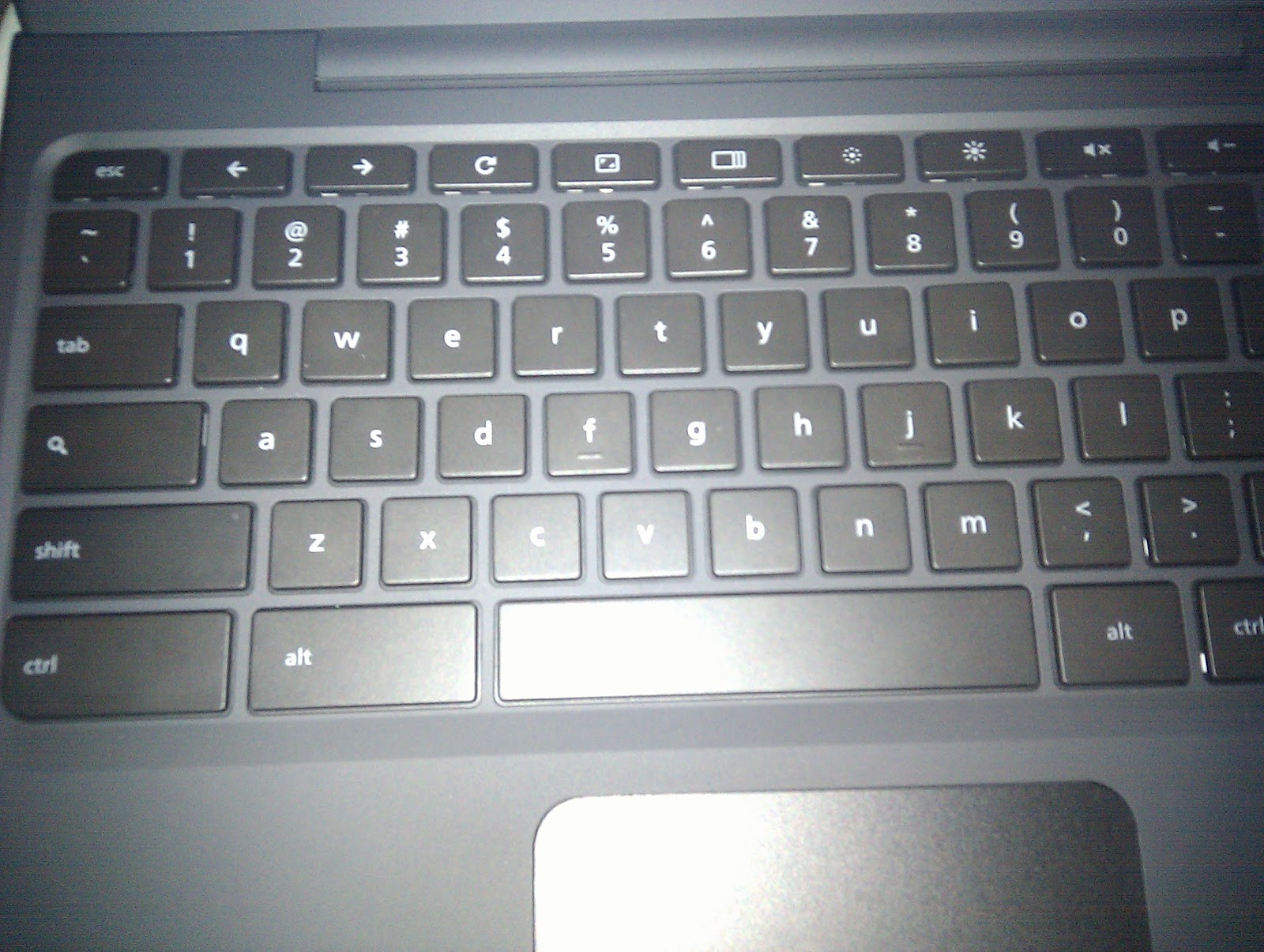
A small compliant so far, the battery doesn’t quite fit 100% snug to the bottom of the case on one corner. Not a deal breaker by any means, but this shows that the company Google hired is still working out the kinks in the manufacturing process. Granted, this is alpha-hardware, and never meant to be sold to the general public in this form, so I really have no reason to complain.
All in all, I really love the simplicity, long battery life, and light weight, easy to carry shape of this build. If this is the template for Chrome OS notebooks, its about to be a very good year for Google. The next post I have lined up is a general overview of Chrome OS, then feature highlights and more in-depth views, including bugs. Stay tuned!
Thursday, December 16, 2010
Cloudbound: Chrome OS Introduction (Part 1)
Welcome to Cloudbound! My brand new blog category dealing with all things Chrome OS and CR48. As some of you may know already (full disclosure here), I am now part of Google's official beta-tester group for Chrome OS and CR48. Before I get into the specifics, let me go over exactly what Chrome OS and CR48 are, just in case you are new to the game.
Chrome OS is a Linux-based operating system made by Google for cloud computing devices. My, oh my, what a buzz word. Cloud computing. What is it exactly? I can guarantee that most of you do some form of cloud computing each and every day.
Cloud computing is using applications and storage on the internet instead of on your local computer. Ever upload a picture to Facebook, Picasa, or Flickr? You’re using the internet to store those pictures, you are using cloud computing! Ever use Google Docs to type up a paper? That’s another example of cloud computing. Ever listen to music on Pandora, watch a television show on Hulu, or upload a video to YouTube? Those are all great examples of cloud-based media services.
So why make an operating system based entirely off of web services? Plenty of reasons! The biggest boil down to the following points:
- No need to back up local data (for the most part) - Everything you need is already in the cloud!
- No need to run cumbersome anti-virus software, as everything you are doing is online, you are only running a web browser (and plugins) on the local machine, nothing else.
- This does, however, place a higher emphasis on staying safe from phishing sites.
- Cheaper computers! If the only requirement is the ability to run a web browser, the hardware needed is relatively cheap to manufacture. No need for expensive components and upgrades. All the power you need is on the web.
Wednesday, June 2, 2010
Google Moves Away from Windows
So, word has been getting around that Google is officially dropping support for Microsoft Windows internally. Computers running Microsoft Windows are going to be phased out for Linux and OSX machines. Honestly... Who didn't see this coming?
Google has stated many times that the default operating system for Googlers is a heavily modified Long Term Support (LTS) version of Ubuntu Linux, affectionately named "Goobuntu". While this modified distribution has never been released outside of Google, it is in wide use and support there, and hardly a secret. That said, Windows machines aren't being done away with entirely, Google has stated that employees that really need to use Windows can acquire special permissions to use the operating system. Lets take this from a fresh angle: If all you really know how to use is Windows, you probably shouldn't be working at Google.
Lets think logically about what Google really needs Windows machines for: Windows development. Sure, they have Picasa, Desktop Search, Earth, and a few other cross-platform apps that they need to build and test on versions of Windows, but these things can easily be accomplished inside a virtual environment. The vast majority of Google's focus right now is split between Chrome OS (Linux), Android (Linux), and the web, and if recent trends have shown us anything, its that Google is interested in moving away from desktop applications altogether. Google has proven that they can take big technologies and move them to the web, and that's exactly what they are focused on. Microsoft's mission used to be "A computer on every desk and in every home, running Microsoft software.", and Google has taken a much more open stance in theirs, what their mission should be is: "A browser on every device, with every person, using Google products."
If Google were a software company first-and-foremost, this would be a huge deal, but they just aren't. Google is focused on providing platforms and services for other people to utilize and build on. Android development tools exist for every platform, and, from a personal point of view, development on Linux platforms tend to be much nicer than Windows or OSX. By keeping Apple machines around, Google is showing that they will still be developing applications for the iPad and iPhone. This is extremely important. Google doesn't want to limit who can use their products, so having a presence on their biggest competitor's device is a wonderful strategy. Google isn't interested in limiting themselves, and being browser-based is the cornerstone of their ideals.
It does seem like Google is setting a precedent for other companies as well. Showing other technology businesses that they can be free from licensing and closed, bug-ridden software. If one of the biggest technology companies in the world can do without Microsoft Windows, anyone can. This move to make their unreliance on Windows official and public seems like a power play to the rest of the industry, setting an example and forging the first path away from Windows. I'm all for more businesses relying on Linux, it will do huge amounts of good for the open source ecosystem and mentality.
Like I said before, I'm really floored that people are surprised over this, everyone should have seen this coming. Only time will tell if other companies are willing to follow Google's example and give up their Windows addiction.
Original Engadget post
Google has stated many times that the default operating system for Googlers is a heavily modified Long Term Support (LTS) version of Ubuntu Linux, affectionately named "Goobuntu". While this modified distribution has never been released outside of Google, it is in wide use and support there, and hardly a secret. That said, Windows machines aren't being done away with entirely, Google has stated that employees that really need to use Windows can acquire special permissions to use the operating system. Lets take this from a fresh angle: If all you really know how to use is Windows, you probably shouldn't be working at Google.
Lets think logically about what Google really needs Windows machines for: Windows development. Sure, they have Picasa, Desktop Search, Earth, and a few other cross-platform apps that they need to build and test on versions of Windows, but these things can easily be accomplished inside a virtual environment. The vast majority of Google's focus right now is split between Chrome OS (Linux), Android (Linux), and the web, and if recent trends have shown us anything, its that Google is interested in moving away from desktop applications altogether. Google has proven that they can take big technologies and move them to the web, and that's exactly what they are focused on. Microsoft's mission used to be "A computer on every desk and in every home, running Microsoft software.", and Google has taken a much more open stance in theirs, what their mission should be is: "A browser on every device, with every person, using Google products."
If Google were a software company first-and-foremost, this would be a huge deal, but they just aren't. Google is focused on providing platforms and services for other people to utilize and build on. Android development tools exist for every platform, and, from a personal point of view, development on Linux platforms tend to be much nicer than Windows or OSX. By keeping Apple machines around, Google is showing that they will still be developing applications for the iPad and iPhone. This is extremely important. Google doesn't want to limit who can use their products, so having a presence on their biggest competitor's device is a wonderful strategy. Google isn't interested in limiting themselves, and being browser-based is the cornerstone of their ideals.
It does seem like Google is setting a precedent for other companies as well. Showing other technology businesses that they can be free from licensing and closed, bug-ridden software. If one of the biggest technology companies in the world can do without Microsoft Windows, anyone can. This move to make their unreliance on Windows official and public seems like a power play to the rest of the industry, setting an example and forging the first path away from Windows. I'm all for more businesses relying on Linux, it will do huge amounts of good for the open source ecosystem and mentality.
Like I said before, I'm really floored that people are surprised over this, everyone should have seen this coming. Only time will tell if other companies are willing to follow Google's example and give up their Windows addiction.
Original Engadget post
Saturday, May 22, 2010
The Magic of Android

One year ago, no one would have argued that Apple was going to own and dominate the consumer smartphone market while RIM was going to continue to dominate the business world. But that was one year ago... Recent NPD numbers show that Android has pulled ahead of the iPhone in the US, but what does this mean for consumers? If you've used both Apple and Android handsets in the past year, I'm sure you've noticed one glaring flaw for Android: The App Stores don't even begin to compare. The iPhone's App Store has been around longer, has more mature (speaking of software code, here...) applications, and a greater variety of both paid and free programs. While the Android marketplace is still playing catchup, Apple is still king of the apps on this front.
Thankfully, all this is about to change. With the recent NPD numbers and the booming success of Verizon's Droid series, consumers can expect the Android marketplace to start booming, and soon. Why? Android is where the numbers are. RIM is on the decline, and Apple is slowing down. If you're a developer, where do you want to sell? On Blackberry? You app is as good as dead. Want to release to Apple? Sure, you've got quite the install-base, but... Why not Android? The install base is obviously good enough to get started, but you have one killer feature that the iPhone just doesn't have right now: An upward trend. Not only will your app be available to a respectable install base, but your potential customer base will continue to grow. Another thing Android has over the iPhone OS is that: As a developer, you are not limited to a single carrier. Develop an iPhone application that pisses off AT&T? Prepare to get banned. With Android, you are never limited to a single carrier. Sprint, T-Mobile, AT&T, and Verizon all have Android offerings (Along with Google's own), and while, admittedly, some are better than others out there, as a developer, you should never fear that you'll be shot down because a single carrier disagrees with what you are doing on their network.
Google is constantly making their Android OS better and better with each release (Apple as well, OS4 looks to be a much-needed shot in the arm for the aging OS3), so there isn't any reason why you shouldn't be developing for a mobile platform. If I had to pick one, I'd pick Android for the pure and simple fact that Google is beating Apple at their own game. Its a great time to be a Googler, and I'm sure there are even greater times ahead.
Subscribe to:
Posts (Atom)